
Brooklyn City Directory Collection Runs
Brooklyn's directory record is a set of overlapping annual, address, telephone, business, and society books, not one uninterrupted series. The Center for Brooklyn History collection guide, DORIS, NYPL, and the Library of Congress each hold different parts of that record. Start with the collection that matches the question. Alphabetical volumes are usually the best first stop for a name, while reverse books are better when the address is already known.
| Collection | Years | Where Held | Access |
|---|---|---|---|
| Early Brooklyn directories | 1796; 1802; 1811; 1822-1826; 1829 onward | BPL/CBH, DORIS, NYPL, and LOC holdings | Catalog, reading-room, and selected digitized routes |
| Residential and general directories | 1822-1967 collection scope, with incomplete runs | BPL/CBH, NYPL, LOC, and digitized collections | Alphabetical name and address evidence |
| Brooklyn Address Books and criss-cross volumes | 1929-1931, 1933-1961, 1963-1970, 1972-1980, 1986 | BPL/CBH | Address-to-name research onsite |
| Later printed directory holdings | 1950-2017 | BPL Central Library, 10 Grand Army Plaza | Library assistance and noncirculating volumes |
| DORIS Brooklyn directories | 1796, 1802, 1811, 1822-1910, 1912-1913, 1933 | NYC Municipal Archives | Holdings, reading-room, and archive procedures |
Catalog coverage is not a promise that every year is available or digitized. The documented gaps include 1827-1828, no 1911 volume in the noted series, and a 1914-1932 suspension in that series. A missing volume is a collection gap, not proof that a name or street disappeared from Brooklyn.
Brooklyn City Directory Dates and Gaps
Publisher names are part of the citation. They distinguish similarly titled books and help a researcher find the right catalog record. Early title lines include Spooner, Leslie, Hearne, Smith, Hope & Henderson, Lain, and Upington before later Brooklyn Directory Company volumes. Record the title page, publisher, nominal year, and page together, since the title can change even when the listing style looks familiar.
- 1796, 1802, and 1811: surviving early directories predate the sustained Brooklyn run.
- 1822: the longer directory sequence begins, with an explicit 1827-1828 pause.
- 1857/58-1899/1900: Lain, then Lain & Healy, supply a long annual run with title changes.
- 1900/01-1919: Upington volumes carry the general borough directory forward.
- 1950-2017: later directory holdings move to BPL Central rather than replacing the older local-history shelves.
Brooklyn joined New York City in 1898, so later cataloging can use borough or city language while older books use Brooklyn town, city, ward, or neighborhood terms. Search each form. A title's date is the volume date, not a guarantee that every listing was gathered on that date.
Note: Retain the volume title and page image with each extracted entry, especially when a surname has several spellings.
Brooklyn City Directory Shelves and Scans
The Center for Brooklyn History at 128 Pierrepont Street holds directory material for 1796-1949. Its research collection does not circulate, and some microfilm reels are stored offsite with a two-week delivery warning. Contact the library for an appointment through its genealogy route. For 1950-2017 material, BPL Central at 10 Grand Army Plaza offers Book a Librarian assistance. NYPL's onsite Brooklyn directory microfilm is cataloged under call number ZAN-G60, while the Library of Congress Brooklyn directory item supplies public-domain scans, title notes, and image-sequence controls.
The Center for Brooklyn History holdings page shows the local-history setting for Brooklyn directory research.
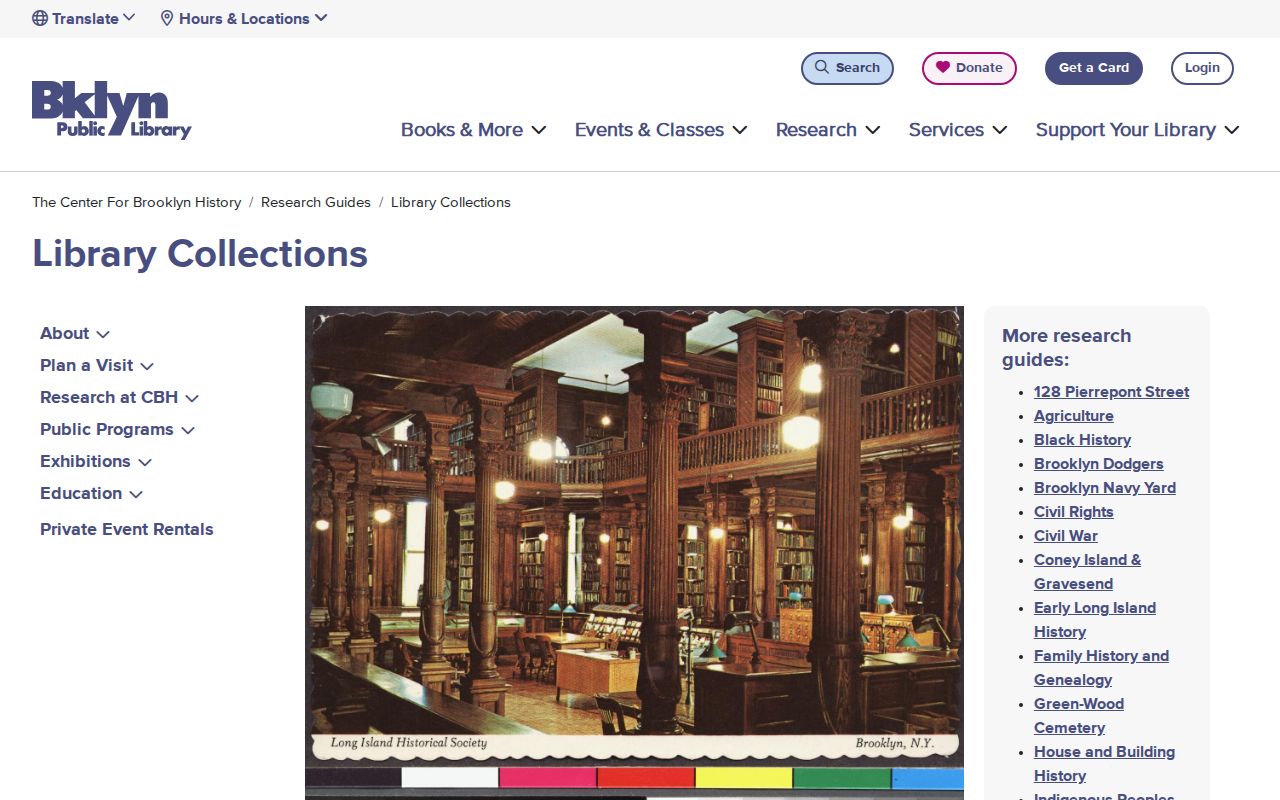
Those holdings place directories beside maps, newspapers, voter registers, yearbooks, cemetery resources, and local records. Use the catalog or reference staff to confirm the specific year before making a trip.
BPL also points to digitized directory material through Internet Archive, but the live file list can change. DORIS offers a separate holdings guide and reading-room routes for historical city material. Its 31 Chambers Street research room follows appointment or posted procedures, while some Brooklyn material is listed at Industry City. Original documents may need advance notice, and the archive provides reference-room computers and reproduction services. These channels matter when a scan has missing pages or the desired year has no online copy.
How a Brooklyn City Directory Entry Reads
Read the title page and abbreviation key before treating a line as a biographical statement. The published pattern usually places a surname and given name or initial with a home or business address and an occupation. Older alphabetical runs primarily identify an adult household head, so women can be underrepresented except when a publisher listed a widow. A business address can look like a home address unless the volume's marks say otherwise.
| Name | Surname plus a given name, initial, or household-head form as printed. |
|---|---|
| Address | A home or business address, depending on the section and the volume's notation. |
| Occupation | A printed occupation or work description that can help distinguish people with the same name. |
| Widow or other notation | An occasional publisher-created clue that should be transcribed exactly, not expanded by assumption. |
| Owner or renter mark | Do not presume one exists. Use a mark only when that volume's key defines it. |
- Criss-cross directory
- A reverse directory arranged by street and number, used to find a listed name from a covered address.
- Householder index
- An alphabetical arrangement centered on a household head rather than a full list of everyone in a building.
- Abbreviation key
- The volume's own explanation of shortened words and marks. Photograph or note it before interpreting an entry.
Brooklyn Criss-Cross Directory Years
When an address is the starting point, the Brooklyn Address Books are the direct route for their covered years: 1929-1931, 1933-1961, 1963-1970, 1972-1980, and 1986. Earlier selective address layers include Elite directories from 1873-1913 and Blue Books from 1904-1962, which have an address section in the back. They are useful historical leads, not complete household rolls.
The BPL family-history and genealogy guide describes the directory, criss-cross, newspaper, cemetery, and yearbook resources that make this reverse search possible.
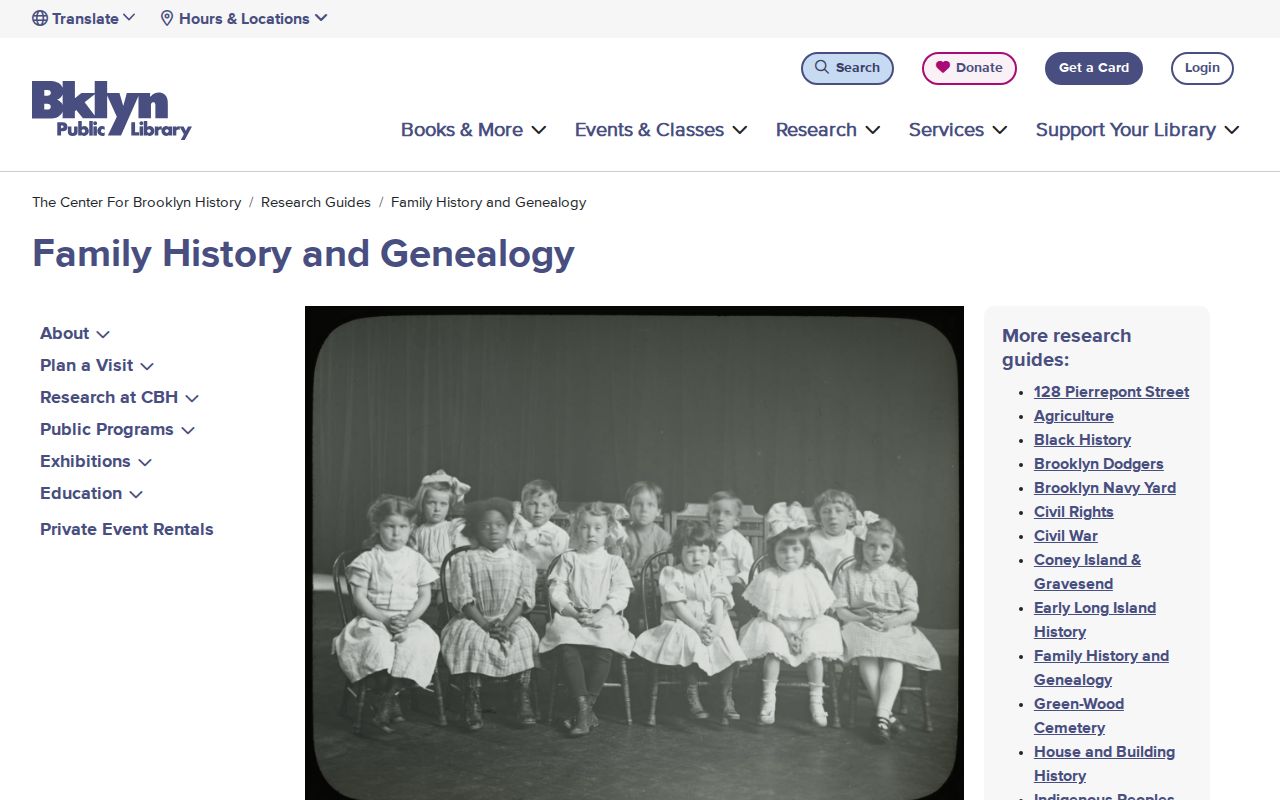
A reverse result belongs to its publication year. It should be paired with an alphabetical volume or another dated record before it is used to place a person at an address.
Brooklyn City Directories and Census Years
Directory years can bridge the long intervals between censuses. For New York State census work in Kings County, the documented years are 1855, 1865, 1875, 1892, 1905, and 1915. DORIS describes those records as arranged by ward or assembly and enumeration district rather than as a complete name index. A directory address, ward clue, map, or street spelling may be necessary before opening a census reel or schedule.
Federal and state census entries can add family relationship, age, nativity, occupation, citizenship, and household context. The directory supplies an annual printed trail; the census supplies a household snapshot. Treat both as records with dates and editorial limits, then preserve the original spelling in each source.
Brooklyn Newspapers and Cemetery Trails
When a name drops from a directory, test more than one explanation. A move, death, changed spelling, unlisted household member, or publisher gap can all produce the same absence. BPL's Brooklyn Newsstand includes 44 digitized local newspapers in the house-history guide, roughly 1826-1999, and its marriage and death-notice card index covers 1809-1845. Search the name, address, organization, and common spelling variants.
The Green-Wood burial and vital-record resource covers 1840-1937 and can supply an endpoint for historical research. A newspaper or cemetery result is a lead to compare with a vital, probate, census, or directory record rather than a replacement for one.
Note: A surname match alone is weak evidence; compare year, address, relatives, and the original source before joining two records.
Brooklyn's Transcribed Historical Records
Historical name research reaches beyond printed directories. In 2025, DORIS announced a project to transcribe digitized records of enslaved New Yorkers dating from 1660-1827. The announcement identified nine digitized volumes from Brooklyn, Queens, and Westchester towns, dating from 1660-1838. The DORIS project announcement is a useful reminder that Brooklyn's name records can sit in town, municipal, and archival series rather than only in annual directory books.
It also reinforces a practical rule: record the repository and series, not only the name. Historic labels and spelling reflect the creator of the original record and should be quoted with context.
Trace a Brooklyn City Directory Household
Build a household trail one dated record at a time. Begin with the most likely year and capture the full entry before searching forward or backward. Use the address section only for a volume that actually contains one. If the line vanishes, check the collection gap, address change, surname variant, newspaper notices, and nearby directory years before reaching a conclusion. For a current parcel or recorded-owner question, use the address records on the Brooklyn Street Directory instead of treating an old listing as a present-day result.
- Find the first reliable name entry and retain its title, year, page, spelling, address, and occupation.
- Search nearby annual volumes, noting every address change and any altered initial, surname, or widow notation.
- For covered years, check the criss-cross section to see which name the publisher placed at the address.
- Pair the directory date with the nearest federal and New York State census, using ward or enumeration geography where needed.
- Use newspapers, Green-Wood, vital records, probate, or deeds to test whether a disappearance reflects a move, a death, or an indexing limit.
Archive staff, reading rooms, microfilm, catalog scans, and the municipal holdings route are all valid access channels. A directory entry is annual publisher evidence, not proof that every person in a building lived there or that the listing remained current after printing.