
Brooklyn Neighbors Block Sources
A Brooklyn block is best understood in layers. The map identifies the parcel. PIP describes the property. ACRIS contains recorded parties and documents. DOB and HPD describe building filings and public enforcement history. Historical address books can provide a dated name at a street number. Each layer has a different role, and none creates a complete list of who lives nearby.
| Source | What It Shows About a Block | Access |
|---|---|---|
| ZoLa, NYCityMap, and Geosupport | Address, BBL, BIN, parcel geometry, cross streets, ZIP, and district context | Public map and address tools |
| NYC Property Information Portal | Owner or entity field, tax class, building and land details, assessments, and recent recording summaries | Free public portal |
| ACRIS | Recorded parties, document dates, parcel references, legal description, and available document images | Free search and image or counter route |
| DOB BIS, DOB NOW, and HPD | Permits, applications, complaints, violations, registrations, and building history | Public address, BBL, or BIN searches |
| BPL address books | Historical address-to-name entries in specified publication years | Center for Brooklyn History and collection routes |
Owner, mailing, applicant, and licensee fields are public record roles. They do not prove that a named person is a present resident. Define adjacent parcels first, then describe the source and date for any name attached to a record.
Brooklyn Neighbors Nearby Parcels
The adjacent-parcel method is map-based rather than a public block list. Use ZoLa, NYCityMap, or Geosupport to locate the target address. Record the BBL and BIN, then zoom to the block geometry. Click each adjoining polygon or label and record the neighboring BBL. A sidewalk-facing building can span multiple parcels, and condos, air lots, and subterranean lots can return more than one record.
- Search the target address and record the standardized address, BBL, BIN when returned, ZIP, and cross streets.
- Identify the target lot and the parcels that share a side or block edge. Mark whether a result is a whole lot, unit, air lot, or subterranean lot.
- Open PIP for each BBL and save only the property data shown for that specific parcel.
- Check DOB, DOB NOW, or HPD for building history, keeping the filing party’s role separate from residence.
- Use ACRIS for recorded parties and legal descriptions. For historical names, consult a BPL address source for its stated publication year.
This process creates a verifiable block record. For a whole named street and its longer chain, the Brooklyn street directory uses a different street-by-street workflow.
Brooklyn Parcel BBLs
BBL means borough, block, and lot. It is the durable parcel key that connects NYC Finance, map tools, DOB systems, and ACRIS. The Finance Property Information Portal accepts address, Borough/Block/Lot, borough/block, condominium, co-op development, REUC, air-lot, and subterranean-lot modes. A result may display owner, tax class, building counts, year, stories, area, exemptions, recent sales, mortgages, liens, and neighborhood districts.
PIP’s recent 50 sales, mortgages, liens, and recorded-document summaries are informational. ACRIS is the official recorded-document source. A property’s situs address is the location of the parcel. Its mailing address can be an owner, attorney, agent, bank, or entity elsewhere. The distinction is crucial for a block review: a mailing line is not proof that the recipient lives on the block.
The NYC Property Information Portal parcel card is the source captured below.
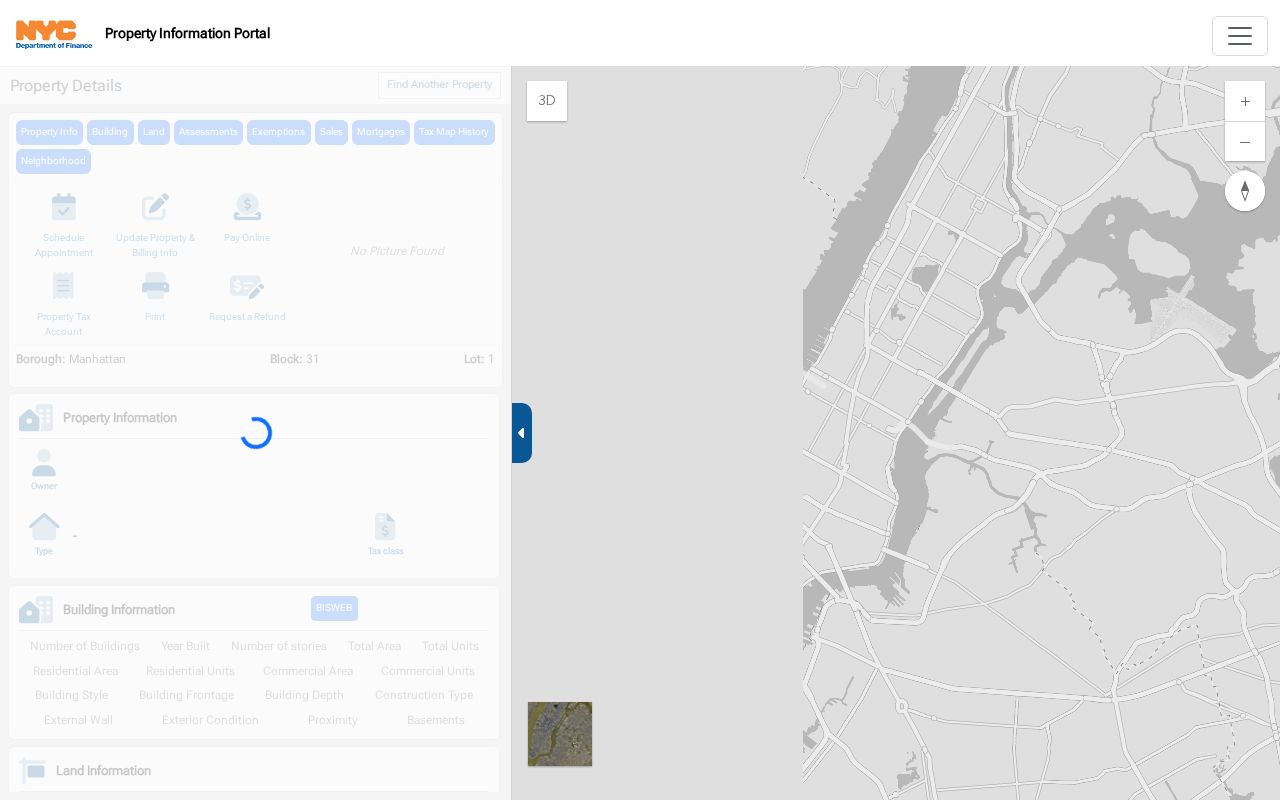
The parcel card illustrates why a block search starts with a property key. It can point to a current tax record or a recorded filing, but it cannot establish every person using a building.
Brooklyn Neighbors Community Boards
Brooklyn’s 18 community boards are public civic anchors, not resident directories. The Borough President’s directory provides office contacts, neighborhood coverage, and meeting routes. Boards publish public meeting and district information. They do not publish household rolls. A board boundary can cross a ZIP, so use the address and BBL for property work and use the board for civic routing.
The Borough President’s Brooklyn Community Boards directory is the source for the office listing shown here.
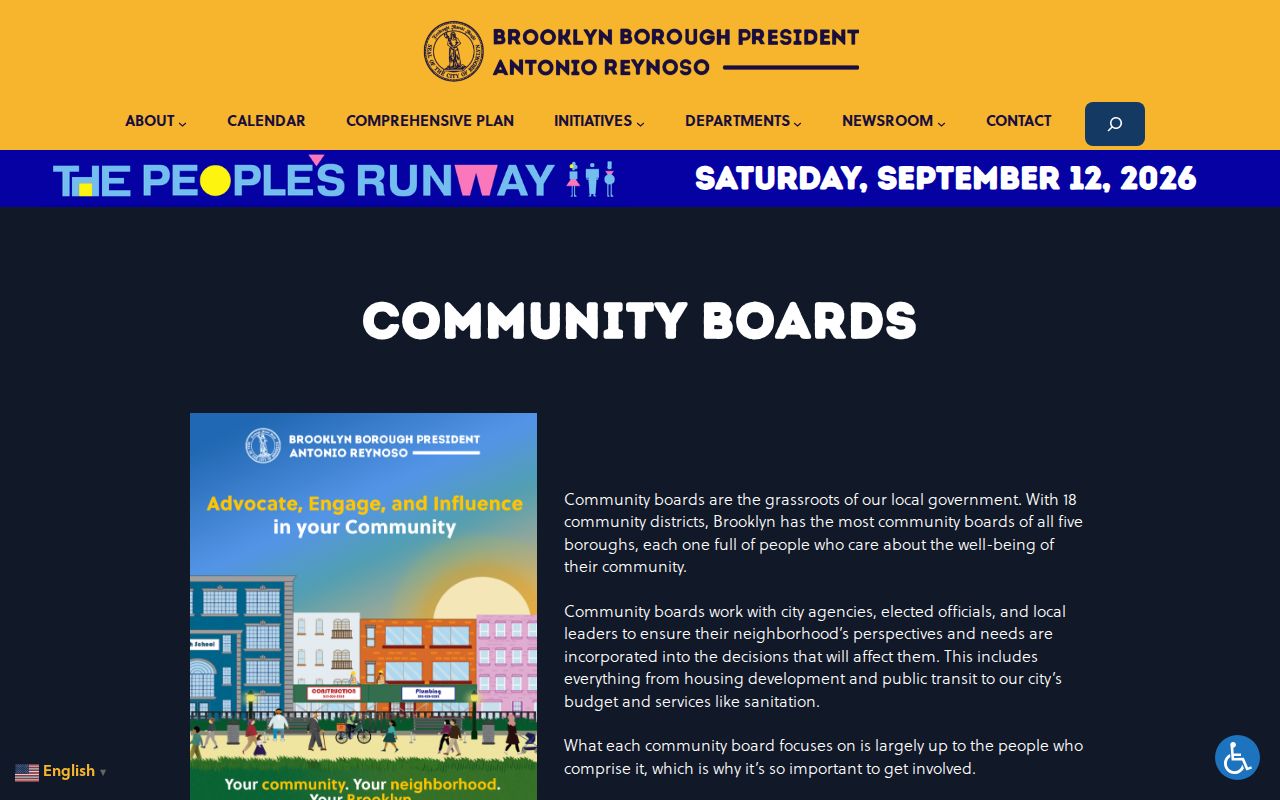
The public directory helps identify an office or meeting path for a given district. It should not be used to infer private membership, a home location, or a person’s connection to a particular block.
| Board | Neighborhood Coverage | Public Contact |
|---|---|---|
| CB1 | Williamsburg, Greenpoint, Northside and Southside | 435 Graham Avenue, 718-389-0009 |
| CB2 | Brooklyn Heights, Fulton Mall, Boerum Hill, Fort Greene, Navy Yard, Fulton Ferry, Clinton Hill | 350 Jay Street, 718-596-5410 |
| CB3 | Bedford-Stuyvesant, Stuyvesant Heights, Ocean Hill | 1360 Fulton Street, 718-622-6601 |
| CB4 | Bushwick | 1420 Bushwick Avenue, 718-628-8400 |
| CB6 | Red Hook, Carroll Gardens, Park Slope, Gowanus, Cobble Hill | 250 Baltic Street, 718-643-3027 |
| CB7 | Sunset Park, Windsor Terrace | 4201 4th Avenue, 718-854-0003 |
The official directory is the umbrella locator for CB1 through CB18. Confirm current meeting times and staff contact details with the board before relying on a calendar entry.
Brooklyn Civic Group Contacts
Public organization contacts can add community context without becoming a private neighbor roster. CB3’s community-organization list includes Bedford Stuyvesant Restoration, Gateway BID, and Brooklyn Neighborhood Services. CB4 publishes community-group and block-association material for Bushwick. Examples named in the research include the Cooper Street Community Association, Friends of Irving Square Park, the 1400 Block of Hancock Association, and the Brighton Neighborhood Association.
These groups may publish meeting or contact information. Membership and household rosters generally are not public. BPL community-history resources also contain records of Prospect Lefferts Gardens Neighborhood Association and Friends and Residents of Greater Gowanus, but archival activity should not be recast as a present-day membership list.
The Brooklyn Chamber directory offers a separate organization layer with business names, categories, addresses, phone numbers, and websites where supplied. It is not a full borough business census and it does not describe nearby households.
Brooklyn Neighbors Voter Limit
NYC’s official Registered Voter Search cannot browse a block. It requires a first name, last name, birth date, borough, and ZIP, and returns a match or Record Not Found. It does not provide a street-wide roster, ballot choices, or a public participation history. A non-match does not establish that a person never lived at an address.
A statewide voter-file request is a separate FOIL route and must state an elections purpose under New York Election Law §3-103(5). The request should describe an existing file, geography, date, and preferred format. Agencies need not create a new street list. ACP participants and confidential voters require special handling and must never be treated as ordinary block data.
Note: Aggregate enrollment figures can describe a district, but they do not identify the people living on nearby parcels.
Brooklyn Neighbors Record Comparison
Official sources are narrower than commercial neighbor tools, but their limits make the record role easier to understand. A map can identify a parcel. PIP can identify a property field. ACRIS can show a recorded party. A commercial category may combine records from different times and sources, so its entry still needs verification against the custodian. Neither route supplies a lawful reason to compile private household information.
| Official record route | Commercial neighbor category | Best practice |
|---|---|---|
| PIP, map, ACRIS, DOB, HPD, or BPL | Compiled identity or address listing | Check the original source, date, BBL, and record role |
| Source-specific fields and custody rules | May mix public and licensed data | Do not assume one listing proves current residence |
| Correction through the custodian | Category-specific removal or correction route | Keep confirmation and recheck after source changes |
New York has no single universal process that erases a name from every public record. If an official entry is wrong, contact its custodian with the record number, BBL, UID, or other precise reference. A FOIL request does not automatically amend a record.
Brooklyn Historic Block Evidence
Historic block work needs a date column. BPL’s criss-cross books cover 1929–31, 1933–61, 1963–70, 1972–80, and 1986. The Sanborn finder covers Brooklyn volumes from 1886 to 1973, while NYC’s tax photographs show building exteriors around 1939–41. Maps and photographs can confirm lot shape, construction, or a building footprint. They do not identify current residents.
Many Brooklyn addresses changed around 1871–72. Older records can also use Flatbush, Flatlands, Gravesend, New Lots, New Utrecht, or City of Brooklyn language because consolidation occurred in 1898. Preserve the printed number, street spelling, ward or town, map date, BBL, and nearby cross streets. Then use lot dimensions and legal description to test whether two sources refer to the same place.
The City’s recent deed-fraud prevention initiative underscores a related point: suspicious recorded filings should be verified with NYC Finance, the City Register, or the official response route. A block map can identify the parcel, but only the actual recorded instrument and custodian can establish what was filed.
Brooklyn Neighbors Privacy Limits
Public block research has hard boundaries. Utility and delivery-customer data are not public. DMV personal address information is restricted by federal and state law. A tax mailing line can point away from the parcel. ACP participants use substitute-address procedures, and confidential voter information must not be reverse-engineered from nearby records. Recorded documents may remain public while particular protected fields, court matters, or safety procedures remain restricted.
When a person has a safety concern, use the relevant agency’s correction, sealing, redaction, pseudonym, or protected-filer process rather than attempting to expose a location. New York’s Address Confidentiality Program protects actual addresses subject to statutory exceptions. A substitute address is not permission to publish the participant’s location.